


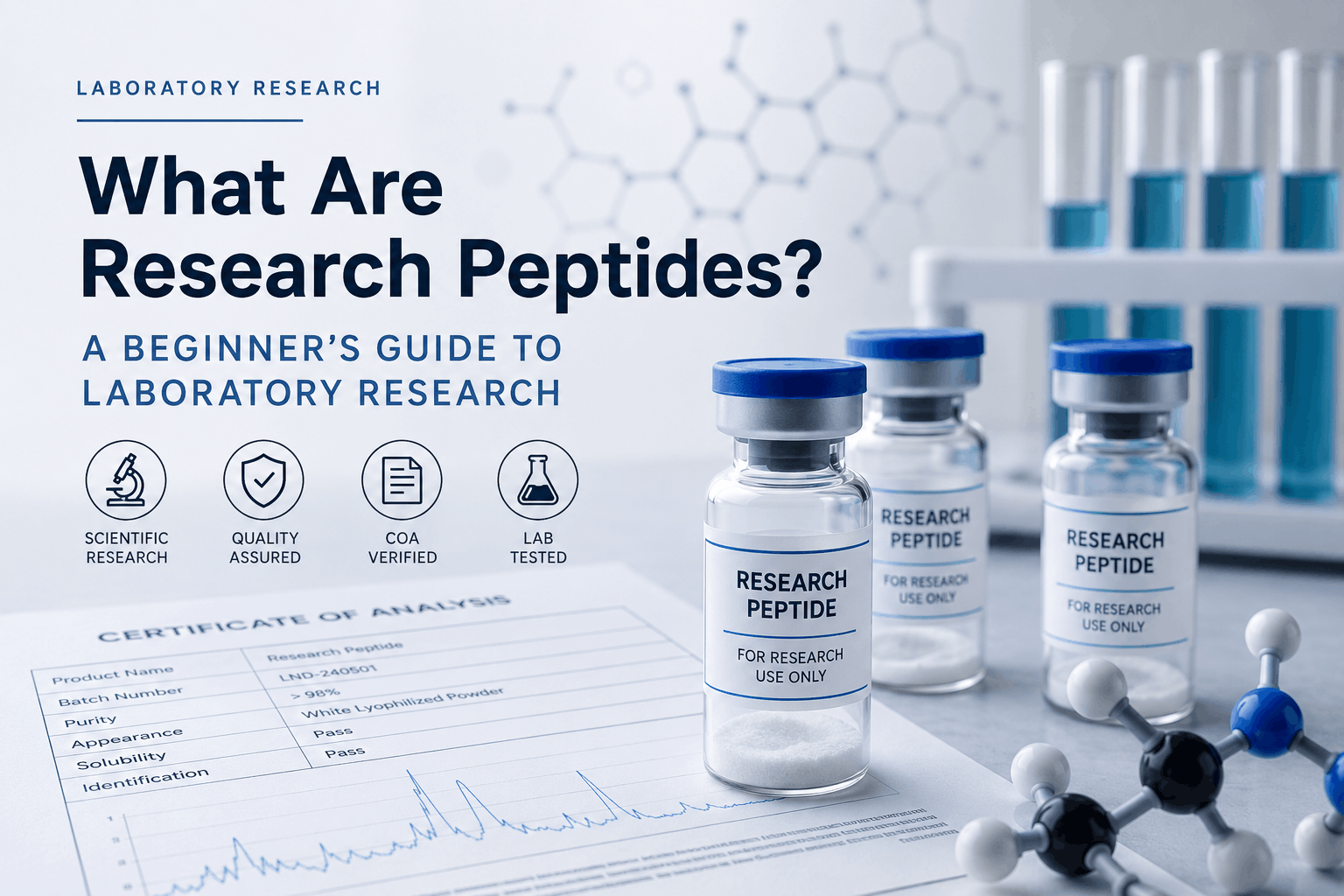
What Are Research Peptides? A Beginner’s Guide to Laboratory Research
Research peptides have become an increasingly important part of modern scientific investigation. From metabolic studies to cellular biology and regenerative research, these short chains of amino acids help researchers better understand complex biological processes.
If you’re new to laboratory research, understanding what research peptides are and how they are used is essential. This guide explains the fundamentals, their role in scientific research, and why quality and documentation matter when sourcing laboratory materials.
What Are Research Peptides?
Peptides are short chains of amino acids linked together by peptide bonds. They are naturally found throughout the body and play important roles in biological signaling, hormone regulation, cellular communication, and numerous physiological processes.
Research peptides are manufactured specifically for laboratory and scientific investigation. They allow researchers to study biological pathways, receptor interactions, and cellular mechanisms under controlled experimental conditions.
These materials are intended exclusively for laboratory research and are not approved for human consumption or therapeutic use.
Why Are Research Peptides Important?
Scientists use research peptides to investigate a wide variety of biological functions. Their relatively small size and specific biological activity make them valuable tools for exploring how cells communicate and respond to different molecular signals.
Research involving peptides contributes to areas such as:
- Cellular signaling
- Metabolic pathway research
- Protein interaction studies
- Tissue regeneration research
- Endocrine system research
- Longevity and aging studies
- Neuroscience research
As scientific understanding continues to evolve, peptides remain an important component of biomedical research worldwide.
Common Categories of Research Peptides
Depending on the research objective, peptides are often grouped into several categories.
Metabolic Research
Researchers investigate peptides involved in glucose regulation, insulin signaling, and energy metabolism to better understand metabolic processes.
Growth Hormone Secretagogue Research
Certain peptides are studied for their interaction with growth hormone pathways, allowing scientists to explore hormone regulation mechanisms.
Longevity and Cellular Health Research
Some research focuses on cellular maintenance, oxidative stress, and biological aging to improve scientific understanding of long-term cellular function.
Cognitive Research
Neuroscience laboratories examine peptides that may influence learning, memory, neural communication, and cognitive pathways.
Recovery and Regenerative Research
Researchers investigate peptides associated with tissue repair, collagen production, and cellular regeneration in controlled laboratory environments.
Why Purity Matters
One of the most important considerations when purchasing research peptides is product quality.
High-quality research materials help laboratories produce more consistent and reliable experimental data. Low-quality or contaminated materials can introduce unwanted variables that affect research outcomes.
When evaluating a research supplier, consider whether they provide:
- High purity standards
- Third-party laboratory testing
- Batch documentation
- Certificate of Analysis (COA)
- Secure packaging
- Lot traceability
These quality assurance measures help support reproducible laboratory research.
Understanding Certificates of Analysis (COAs)
A Certificate of Analysis (COA) provides documentation about a product’s testing results.
A typical COA may include:
- Product identity
- Batch or lot number
- Purity percentage
- Testing methodology
- Manufacturing information
- Quality control verification
Researchers often review COAs before incorporating materials into their experimental protocols.
Proper Storage of Research Peptides
Proper storage helps maintain product integrity throughout laboratory use.
General best practices include:
- Store according to manufacturer recommendations.
- Protect products from excessive heat and moisture.
- Avoid unnecessary freeze-thaw cycles.
- Keep products sealed until needed.
- Label opened materials appropriately for laboratory tracking.
Always consult the specific storage instructions provided with each product.
Choosing a Reliable Research Supplier
Selecting a trusted supplier is just as important as selecting the correct research material.
A dependable supplier should provide:
- Transparent product information
- Verified laboratory testing
- Available batch documentation
- Responsive customer support
- Secure shipping and packaging
- Consistent inventory
Reliable documentation allows researchers to make informed purchasing decisions while maintaining confidence in their laboratory materials.