


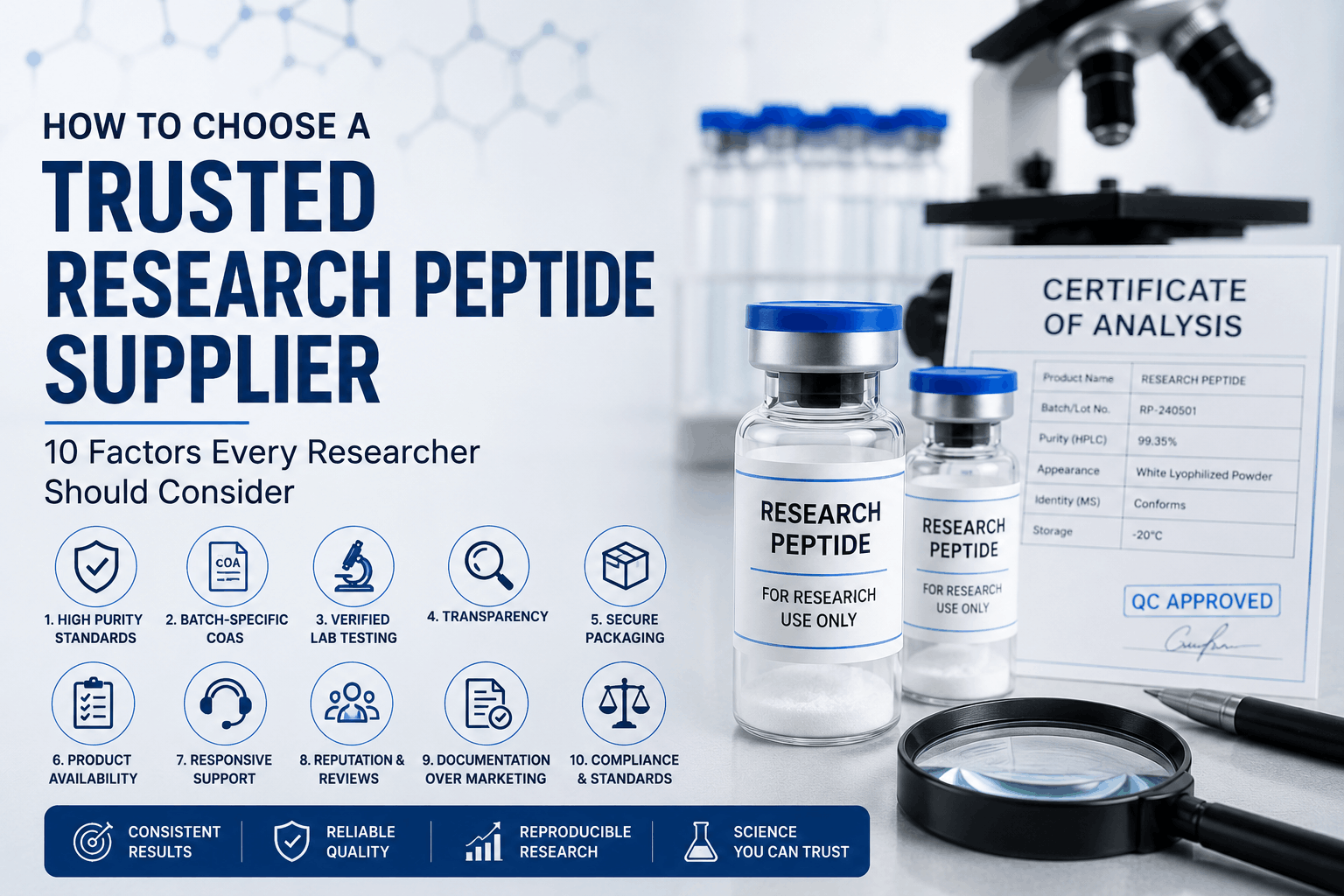
How to Choose a Trusted Research Peptide Supplier: 10 Factors Every Researcher Should Consider
Selecting the right research peptide supplier is one of the most important decisions a laboratory can make. While pricing is often a consideration, product quality, documentation, transparency, and consistency have a far greater impact on successful research outcomes.
With hundreds of suppliers available online, it can be difficult to determine which companies prioritize quality and scientific integrity. This guide explains the most important factors researchers should evaluate before purchasing research peptides.
Why Your Supplier Matters
Even well-designed experiments can produce inconsistent results if the research materials themselves vary in quality.
A reputable supplier helps minimize unnecessary variables by providing properly manufactured products, verified testing documentation, and consistent batch quality. Choosing a trusted supplier supports reliable and reproducible laboratory research.
1. Look for High Purity Standards
Purity is one of the first specifications researchers review.
Most reputable suppliers provide peptides with high purity levels verified through analytical testing such as High-Performance Liquid Chromatography (HPLC).
Higher purity helps reduce unwanted impurities that could interfere with laboratory studies.
Always verify purity through supporting documentation rather than marketing claims.
2. Request Batch-Specific Certificates of Analysis (COAs)
Every research peptide should have documentation tied to its individual batch.
A quality Certificate of Analysis typically includes:
- Product identification
- Batch or lot number
- Purity results
- Testing methodology
- Identity verification
- Quality control approval
Batch-specific documentation improves traceability and supports research consistency.
3. Verify Laboratory Testing
Reliable suppliers perform analytical testing before products become available for purchase.
Common testing methods include:
- High-Performance Liquid Chromatography (HPLC)
- Mass Spectrometry (MS)
- Identity verification
- Purity analysis
These analytical techniques help confirm product quality and accuracy.
4. Evaluate Transparency
A trustworthy supplier is transparent about its products.
Look for companies that clearly provide:
- Product specifications
- Testing information
- COAs
- Storage recommendations
- Customer support
If basic product information is difficult to obtain, it may be worth considering another supplier.
5. Check Product Storage and Packaging
Proper storage and packaging help preserve peptide stability during shipping and storage.
Quality suppliers generally use:
- Tamper-evident packaging
- Secure vial sealing
- Moisture-resistant materials
- Protective shipping methods
These precautions help maintain product integrity until it reaches the laboratory.
6. Review Product Availability
Consistent inventory is important for ongoing research projects.
Frequent stock shortages may delay experiments or require switching between suppliers, introducing unnecessary variability.
Reliable suppliers maintain stable inventory for their core research products whenever possible.
7. Consider Customer Support
Good customer service is often overlooked.
Researchers may occasionally need assistance with:
- Batch documentation
- COA requests
- Shipping questions
- Product specifications
- Order status
Responsive support demonstrates professionalism and transparency.
8. Research the Company’s Reputation
Spend time reviewing the supplier before placing an order.
Look for evidence of:
- Professional website
- Clear documentation
- Transparent business information
- Educational resources
- Consistent communication
A company that invests in scientific education often demonstrates a stronger commitment to the research community.
9. Prioritize Documentation Over Marketing
Some websites rely heavily on promotional language while offering very little technical information.
Professional research suppliers typically emphasize:
- Product quality
- Analytical testing
- Laboratory documentation
- Batch traceability
- Scientific transparency
Documentation should always carry more weight than advertising.
10. Ensure Compliance With Research Standards
Responsible suppliers clearly identify their products as laboratory research materials.
Their websites should include:
- Research Use Only (RUO) notices
- Product documentation
- Laboratory-focused descriptions
- Proper handling guidance
Clear compliance messaging helps researchers understand the intended use of the products.
Warning Signs to Watch For
Researchers should be cautious of suppliers that:
- Do not provide COAs
- Cannot verify purity
- Offer unrealistic claims
- Hide product specifications
- Provide inconsistent documentation
- Lack customer support
- Have unclear business information
Taking time to evaluate these warning signs can help reduce purchasing risks.
Why Quality Matters
High-quality research materials contribute to:
- Better experimental consistency
- Improved reproducibility
- Greater confidence in laboratory data
- Reduced contamination risks
- Stronger scientific documentation
While no supplier can guarantee research outcomes, consistent product quality supports more reliable laboratory work.